Aurora Hub.
A scalable operational platform designed to unify service management, dealer networks, and business workflows. Multi-tenant SaaS architecture for real-world dealership operations.
- Client
- Aurora Vehicles Inc. (dashcams & accessories) · Vancouver, BC
- Year
- 2025 — now
- Stack
- Next.jsSupabasePostgreSQL
The outcome
Before
Dealers, installers and the head office juggled email, spreadsheets and separate tools — every service request was chased by hand.
After
9 dealers and 50+ users run on one platform: 600+ requests and CA$330K+ in business handled in one place, each dealer seeing only their own data.
Under the hood
01 / The Problem
Service-based businesses struggle with fragmented systems — CRM, operations, tracking — all disconnected. This creates inefficiency, data inconsistency, and manual workarounds that slow down growth.
02 / The Solution
Aurora Hub combines all operational layers into a modular, extensible core system. One platform for dealers, service providers, and managers. Event-driven architecture enables scalable, maintainable growth.
What Aurora Hub does
Multi-tenant architecture
Isolated data per organization with shared infrastructure
Unified CRM & operations
Service management, dealer access, and workflows in one core
Modular system design
Extensible modules that plug into the core without refactoring
How it flows
- Step 01
Dealer onboards
Unique codes, emails, and role-based access
- Step 02
Service providers connect
Link to dealer network and workflows
- Step 03
Operations run unified
CRM, tasks, and tracking in one place
- Step 04
Data stays consistent
Single source of truth across modules
Architecture & Technical Design
The shape of the system
// Core system structure
Core System
├── Auth & Identity (multi-tenant)
├── Dealer Management Module
├── Service Operations Module
├── Event Bus (internal)
└── Database Layer (PostgreSQL)

// Event-driven flow
TaskCreated → AssignDealer → Notify → TrackProgress
Decisions
Key technical decisions
- 01
Shared schema with row-level security for tenant isolation
Rejected: Database-per-tenant · Schema-per-tenant
RLS moves the isolation guarantee from application code into Postgres itself: a forgotten WHERE clause cannot leak data. One migration path serves every tenant, and cross-tenant admin reporting stays a normal query instead of a federation problem.
- 02
Event-driven communication between modules
Rejected: Direct service calls · Shared database triggers
Dealer onboarding, notifications, and progress tracking subscribe to domain events instead of calling each other. New modules plug into the event bus without touching existing code — this is how the service-operations module shipped without a core refactor.
- 03
PostgreSQL JSONB for module-specific payloads
Rejected: Rigid per-module tables · Separate document store
Core entities stay strictly relational (tenants, users, tasks), while module payloads that evolve quickly live in validated JSONB columns. One database, transactional writes, and GIN indexes keep lookups fast.
Code
Real code patterns
Row-level security: isolation enforced by the database
Every tenant-scoped table carries the same policy. SET LOCAL binds the tenant to the transaction, so pooled connections can never bleed context between requests.
ALTER TABLE customers ENABLE ROW LEVEL SECURITY;

CREATE POLICY tenant_isolation ON customers
  USING (tenant_id = current_setting('app.tenant_id')::uuid);

-- The API sets the tenant once per request, inside the transaction
BEGIN;
SET LOCAL app.tenant_id = '9f3c2e1a-…';
SELECT * FROM customers ORDER BY created_at DESC LIMIT 50;
COMMIT;
Typed event bus: modules stay decoupled
The event map is a single source of truth for payload types, so a renamed field breaks the build instead of production. Notification and KPI modules were added later without modifying task code.
type DomainEvents = {
  'dealer.onboarded': { tenantId: string; dealerId: string };
  'task.created': { tenantId: string; taskId: string; assigneeId: string };
  'task.completed': { tenantId: string; taskId: string; durationMs: number };
};

// Handlers register against event names — the emitter never knows who listens
bus.on('task.created', async ({ tenantId, taskId, assigneeId }) => {
  await notifications.send(tenantId, assigneeId, { kind: 'task_assigned', taskId });
});

bus.on('task.completed', async ({ tenantId, durationMs }) => {
  await kpi.recordCompletion(tenantId, durationMs);
});
In production
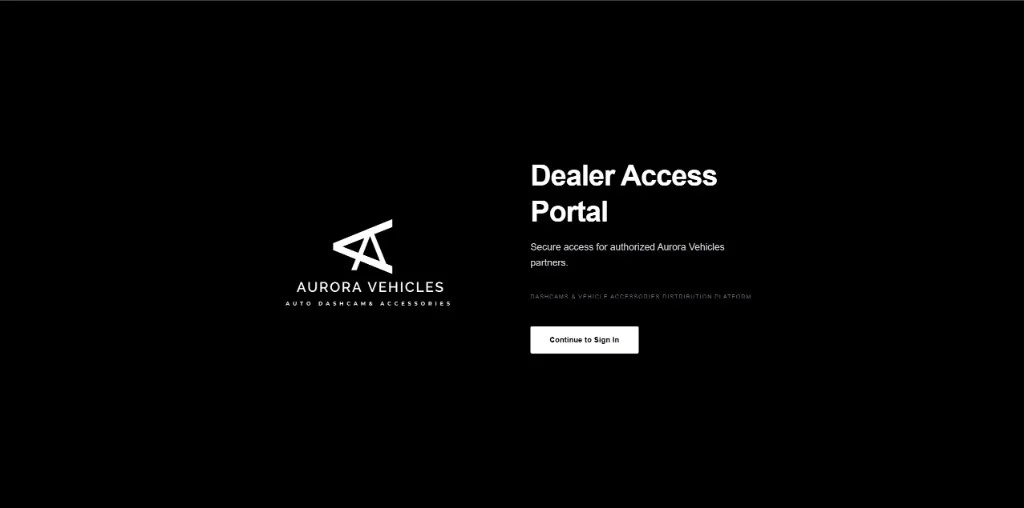
The Aurora Hub dealer access portal, live at aurorahub.ca.
Why It Matters
Dealers and service providers get a unified experience. No more switching tools or reconciling spreadsheets. Operations scale with the business, not against it.
Next case study
EV SLAWork together
Curious how the rest was builtLet's talk.
The writing section covers the multi-tenant design in depth — or reach out directly.